Physical Address
304 North Cardinal St.
Dorchester Center, MA 02124
Physical Address
304 North Cardinal St.
Dorchester Center, MA 02124
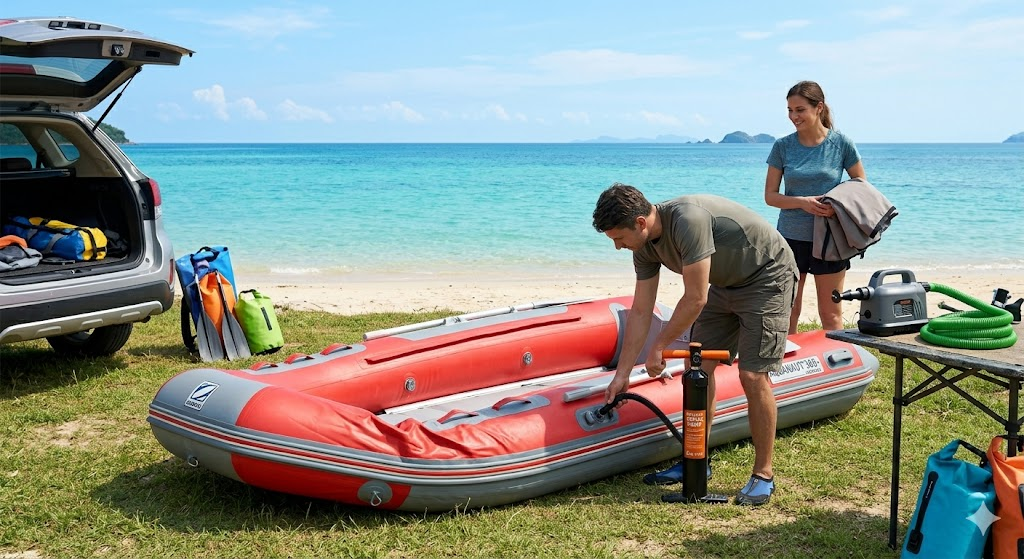
Have you ever stood on a sunny beach, ready for adventure, but felt a little confused by all the valves and pumps? You aren’t alone! Learning how to inflate zodiac boat setups is the first step to a great day on the lake or ocean. It might look like a giant balloon, but these boats are high-tech machines.
When you inflate zodiac boat chambers correctly, you ensure your safety and help the boat move faster through the waves. Think of it like a bicycle tire; if it’s too soft, it’s hard to pedal. If it’s too hard, it might pop! In this guide, I’ll share my personal tips and a simple plan to help you get from the trunk of your car to the open water in no time. Let’s get started!
| Feature | Recommended Setting / Detail |
| Main Tube Pressure | 3.4 PSI (240 mbar) |
| Keel Pressure | 3.4 to 4.0 PSI |
| High-Pressure Floor | 10.0 to 11.0 PSI |
| Inflation Sequence | Bow (Front) → Stern (Rear) → Floor → Keel |
| Valve Type | Semi-recessed or Delrin Valves |
| Best Pump Type | Dual-action Manual or Specialized Electric Pump |
Safety is the most important part of boating. If you don’t inflate zodiac boat tubes to the right pressure, the boat can become “floppy.” This makes it hard to steer. Imagine trying to drive a car with four flat tires—it just doesn’t work well! A firm boat stays stable when you hit a wave.
Also, a well-inflated boat lasts longer. When the tubes are firm, the fabric doesn’t rub against the floorboards as much. This prevents small holes and wear. Using a pressure gauge is the best way to be sure you are safe. Trust me, spending five extra minutes checking your PSI (pounds per square inch) is much better than having a soggy boat in the middle of the lake!
You have two main choices: a foot pump or an electric pump. Most Zodiacs come with a foot pump. These are great because they are simple and don’t need a battery. However, they can be a bit of a workout! If you want to save your energy for rowing, an electric pump is a lifesaver.
When you use an electric pump to inflate zodiac boat chambers, make sure it has an automatic shut-off. This feature stops the air once it hits the perfect pressure. Never use a gas station air compressor! Those are way too powerful and can burst your boat’s seams in a heartbeat. Stick to pumps made specifically for inflatable boats.
Before you start, look at the ground. You want a spot that is smooth. Rocks, sticks, or sea shells can poke a hole in the PVC or Hypalon fabric. I like to lay down a large tarp first. This keeps the boat clean and adds a layer of protection.
Unfold your boat slowly. If it was stored in a cold garage, the material might be stiff. Let it sit in the sun for a few minutes to soften up. This makes it much easier to inflate zodiac boat sections without putting stress on the folds.
Zodiac boats usually have “semi-recessed” valves. These have a little button in the middle. If the button is down, the valve is open (air comes out). If the button is up, the valve is closed (air stays in).
Before you hook up the pump to inflate zodiac boat tubes, make sure the button is in the up position. This way, when you pull the pump hose out, all that hard-earned air doesn’t hiss back at you! It’s a common mistake that even pros make once in a while.
Don’t just fill one chamber all the way! Most Zodiacs have 2 or 3 separate air sections for safety. You want to inflate zodiac boat chambers evenly. Start by filling each section until it has a bit of shape but is still soft.
Once all sections have some air, go around again and bring them up to full pressure. This prevents the internal “bulkheads” (the walls between air sections) from being stretched too hard in one direction. It keeps the boat balanced and strong.
What is the magic number? For most standard Zodiac tubes, it is 3.4 PSI. If you don’t have a gauge, use the “flick” test. Give the tube a quick flick with your finger. It should sound like a drum. If it feels like a soft pillow, you need more air.
To inflate zodiac boat floors (if you have an air-floor model), you need much more pressure—usually around 10 PSI. This makes the floor feel as hard as a piece of wood so you can stand on it safely. Always check your manual to be 100% sure.
The keel is the “V” shape at the bottom of the boat. It helps the boat cut through water and go straight. You should inflate zodiac boat keels last, after the floor is in place.
The keel doesn’t need as much air as the floor, but it should be firm. Once the keel is full, your boat will look sharp and ready for the motor. This is the secret to getting “on plane” (sliding over the water) quickly!
Here is a “pro tip” I learned the hard way: air shrinks when it gets cold. If you inflate zodiac boat chambers on a hot beach and then put the boat in cold water, it will suddenly feel soft. This isn’t a leak; it’s just science!
Keep your pump handy for the first 15 minutes of your trip. You might need to add a few puffs of air once the water cools the tubes down. On the flip side, if the boat is sitting on the hot sand all day, let a little air out so the sun doesn’t over-pressurize it.
One big mistake is over-inflating. People think “harder is better,” but too much pressure can damage the seams. Another mistake is forgetting the valve caps. These caps are actually the second seal that keeps the boat airtight.
Also, never drag your boat over gravel once you inflate zodiac boat tubes. Even though they are tough, the extra weight makes them easier to scratch. Always use two people to carry it or use “launching wheels” to reach the water.
After your fun day, give the boat a quick rinse with fresh water. Salt and sand can eat away at the valves over time. When you are ready to put it away, make sure it is completely dry to prevent mold.
If you keep the boat inflated for the season, cover it with a tarp. The sun’s UV rays are the biggest enemy of inflatable fabric. A little bit of care goes a long way in keeping your Zodiac ready for years of adventure.
1. Can I use a car tire pump to inflate my Zodiac?
No, you should avoid car compressors. They provide high pressure but low volume. They can easily overheat or cause the boat to burst because they don’t have the right limiters.
2. How long does it take to inflate a Zodiac boat?
With a manual foot pump, it usually takes about 10–15 minutes. With a high-quality electric pump, you can be done in under 5 minutes!
3. Why does my boat feel soft after I put it in the water?
This is caused by the cold water cooling the air inside. When air cools, it takes up less space. Simply add a little more air with your pump once you are in the water.
4. What happens if I over-inflate my boat?
Over-inflation puts a lot of stress on the glued or welded seams. In the worst case, a seam could pop, or you could damage the internal bulkheads.
5. How often should I check the air pressure?
I recommend checking it every time you go out. Changes in weather and temperature will always change the pressure inside the tubes.
6. Do I need to take the floor out to deflate it?
If you have a removable hard floor (wood or aluminum), it is best to deflate the tubes slightly before trying to pull the floorboards out. This prevents them from getting stuck.
Learning how to inflate zodiac boat models is a skill that gets easier every time you do it. By following the right sequence, using the correct pressure, and watching the temperature, you’ll have a boat that performs perfectly.
Remember, a happy boat is a firm boat! Take care of your equipment, and it will take care of you out on the water. Now, grab your life jacket, start your motor, and enjoy the ride!
